
Wait, Did I take the lamp from my barrack?! Oil lamps in the roman army
Lamp in Roman Army
From the first century BC until the fifth century AD the Roman Empire controlled a big part of Europe, North Africa and the Near East centered around the Mediterranean Sea. For further protection, military camps with thousands of soldiers were situated at several places along this natural border. Among the most abundant and enigmatic personal objects archaeologists have found in military camps are picture lamps, ceramic oil lamps decorated with an image relief on the upside discus Oil lamps helped people illuminate their rooms and tents, spaces which were often dark due to the absence of (large) windows. With light it was possible to work, to dine or to recreate during the evening or the night.
As fuel for their picture lamps, soldiers mostly used olive oil. Usually they did not use olive oil of high quality, as this was expensive and needed for cooking and had to be imported from southern areas such as Spain . Hence, the use of olive oil for oil lamps was generally reserved for high-ranking officers and this would signify a substantial level of prestige and prosperity .For lower-ranking soldier’s common alternatives were naphtha and bitumen. Also used was dried grass greased by fat, wax or sulphur, as were cannabis, hemp, mullein and papyrus.
The Roman economy knew a widespread system of branch workshops with a sizable interprovincial trade. Clay could be found almost everywhere and the manufacturing technique of lamps was not difficult (Harris 1993, 19). Because of this, it is likely that the simple terracotta lamps were made in the surrounding of the places where they were sold. During the second half of the first century AD, the production of lamps completely came to a halt. Two main reasons have been given for this. First of all, there was less demand for lamps from military legions, because of changes in their social and ethnic structures, with more auxiliary, or locally born soldiers, and less soldiers of Roman origin. These auxiliary were less familiar with oil lamps and preferred hearths, torches, or chips of resin-rich wood. Furthermore, from the Flavian period on there is a certain degree of standardization, which could have resulted in the introduction of a new type of lamp, the so-called Firmalampe, which could be produced in greater numbers through optimisations of the production process. This type of lamp, more plain and simple than picture lamps, gradually took over the military market as well. There is no consensus on when these lamps were first produced. According to Loeschke Firmalampe were probably produced from AD 75 on.
Roman barracks and light
Long L-shaped barrack ranges are a familiar feature of Roman forts. A large house which projected out at one end of the block would have housed the commander of the contingent, normally either a centurion (if it was an infantry unit) or a decurion (if cavalry). The soldiers would then have lived in blocks within the barracks. An eight man infantry section (contubernium) would have occupied each two room block, and probably used one room for sleeping and the other for other purposes such as storing equipment.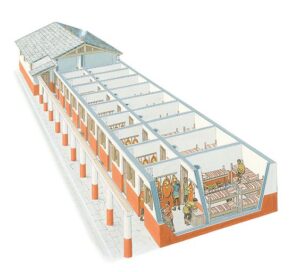
Fig.1. Roman barracks-reconstruction (https www.pinterest.pt/pin/526076800213647064/)
According to our current knowledge of soldiers’ barracks in the principate period, the architectural features of these structures did not provide access to a suitable amount of natural light; therefore, the need to attend to this shortcoming by means of artificial lighting would seem evident. In fact, the barracks reconstructions from South Shields (Britannia) and Saalburg (Germania Superior) display structures with rather dim interior spaces, where hardly any activity would be possible without artificial lighting. Conversely, the question of lighting in the barracks has not been addressed so far through the systematic analysis of the lighting devices associated with these building.
The investigation so far has shown that the conspicuously low number of lamps discovered in the studied military installations was probably
insufficient to provide alone a suitable amount of artificial light. The use of alternative sources of light, as asserted in other cases, must be considered here as well, though there is little archaeological evidence
to substantiate this. Due to research deficiencies in this field, it is nearly impossible to establish chronological tendencies in the lamp usage
inside the barracks. Still, the figures from the fort at Buciumi indicate a possible peak in lamp consumption at the end of the 2nd century AD.
However, the very low numbers of lamps taken into consideration, as well as the ambiguous dating methods employed, induce a high level of uncertainty in this respect.
The compared figures from the military sites discussed here also indicate some potential differences. The finds from the legionary fortress clearly show considerably more intensive lamp consumption
compared with the auxiliary forts discussed. It is likely that this discrepancy is not simply a consequence of the difference in the dimensions of the respective military facilities, and might be connected with the idea that legionary fortresses have enjoyed a more prolonged and relatively constant supply of olive oil.
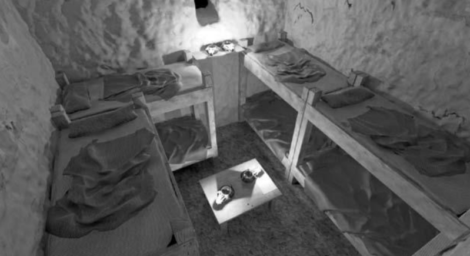
Fig. 2. Artistic impression of the lit up contubernium (Petruţ, Gui and Trîncă, 2014, 87, fig. 12).
Bibliography:
Bishop, M.C., Handbook to Roman Legionary Fortress, 2012.
Sear, F., Roman Architecture, New York 1982.
Bussière J., Lindros Wohl B. 2017, Ancient Lamps in the J. Paul Getty Museum, Los Angeles.
Perlzweig J., Lamps of the Roman Period, First to Seventh Century afer Christ, Athenian Ago-ra, 7, Princeton 1961.